
Stargazing in Paros
Witness the Aegean night sky in its purest form.
Join an intimate stargazing session under the crystal-clear Cycladic sky and rediscover the universe one constellation at a time.
Experience The Aegean Night Sky Like Never Before
With low light pollution and wide sea horizons, Paros is one of the easiest places in the Cyclades to actually see the Milky Way. Our stargazing sessions take you away from village lights to a quiet viewpoint where you can lie back, trace the constellations and watch the night deepen over the Aegean. Whether you come as a couple, family or solo traveller, stargazing in Paros is a slow, beautiful evening: stories about Greek myths and modern astronomy, telescope views when the wind allows, and plenty of time to simply breathe and look up.
Related: If you are planning an evening heavy itinerary, start with Experiences in Paros and keep Things to do in Paros open for lighter daytime ideas.
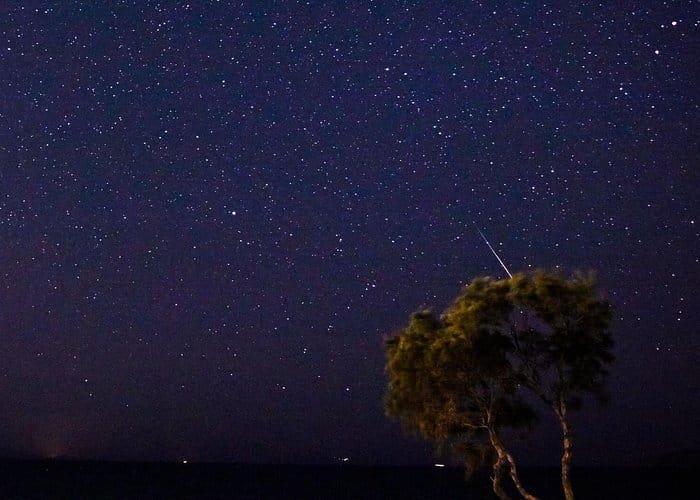
Stargazing in Paros: Guided Night Sky & Greek Mythology
Quick guide: is stargazing in Paros for you?
Stargazing in Paros is less about “ticking an activity box” and more about slowing down for a couple of hours under a huge Aegean sky. Use this quick guide to see if it fits your trip:
If you want one quiet, unforgettable night: book a stargazing session. It is simple, romantic and very different from beach and village evenings.
If you are into myths or science: you will enjoy hearing the Greek stories behind the constellations along with clear explanations of stars, planets and the Milky Way.
If you like photography: bring a tripod and try a few simple night-sky shots before or after the main session.
If you are travelling as a couple: this is one of the best “date nights” on the island, especially with a glass of wine in hand.
If you have kids or teens who love space: stargazing is a calm, screen-free way to keep them amazed and actually learning something.
If you hate crowds and noise: choose stargazing over a busy bar night. It is quiet, wide open and you can hear the sea.
Tip: Stargazing pairs well with a relaxed beach day or a slow village evening so you are not tired when the stars come out.
Easy planning links: Beaches in Paros · Villages in Paros
Stargazing in Paros – full guide
This is the complete guide to stargazing in Paros. It covers why Paros is so good for starry nights, what a typical session looks like, how the telescope and weather work together, who this experience suits best, what to bring, and how to time and book your night under the Cycladic sky.
Jump to:
Why stargazing in Paros is special ·
What a typical stargazing night looks like ·
Location, telescope and weather notes ·
Who stargazing in Paros is best for ·
What to bring ·
How to book and timing
Why stargazing in Paros is special
Paros sits in the middle of the Aegean, away from large cities and heavy light pollution. On clear nights the sky opens up with thousands of visible stars, a bright Milky Way band on the best nights, and a full dome of constellations from horizon to horizon.
- Less light, more stars: Many viewing spots sit above small villages or on quiet hillsides, so you get a much darker sky than in most mainland locations.
- Wide open horizons: Over the sea you often see stars almost touching the water, which makes constellations and the Milky Way feel much larger.
- Dry summer nights: In high season the air is usually dry and clear, which helps stars look sharp instead of fuzzy.
Instead of a crowded bar night, you get a calm, slow evening with a glass of wine in hand, your feet on the ground and your eyes fully in the sky.
If you want more calm experiences: see yoga in Paros or book a recovery day with massage in Paros.
What a typical stargazing night looks like
The full experience usually lasts about 2.5 to 3 hours, from dusk into full darkness. Exact times change through the season, but the rhythm stays similar:
- Arrival and settling in: You meet your guide at a quiet spot with wide views. There is time to get comfortable, adjust your eyes to the fading light, and let the noise of the day drop away.
- First stars and stories: As the sky darkens, you start to pick out the first bright stars and planets. Your guide explains what you are seeing in simple language, linking Greek myths to modern astronomy.
- Deep sky through the telescope: When the sky is dark enough and the wind allows, the professional telescope comes out. You take turns looking at selected objects such as planets, star clusters, or the brighter nebulae.
- Milky Way and constellations: On good nights you can see the Milky Way as a clear band overhead. You learn how to find the main constellations, your zodiac sign, and some easy navigation tricks.
- Quiet time: There is space in between for silence, photos, questions and just holding hands while you look up. No rush, no schedule pressure.
You go back to your place with a calmer mind, a few new star names in your head, and a strong memory of how big the sky over Paros really is.
Daytime contrast: pair this with sea kayaking in Paros or hiking in Paros for a different kind of Aegean perspective.
Location, telescope and weather notes
Stargazing in Paros always adapts to the weather. Wind and clouds matter more than temperature.
- Viewing spots: Sessions usually take place on open ground with a sea view or on a hill outside the villages. These spots are chosen for low light pollution and safe footing.
- The telescope: Your guide uses a professional telescope for close views of selected objects. On windy nights or if dust and humidity are high, the telescope may be used less and the focus shifts more to naked eye constellations and storytelling.
- Wind and comfort: Even in summer, light jackets or layers are smart after dark, especially if there is a north meltemi wind. The air can feel cooler than you expect when you stand still for a long time.
- Moon phase: Darker, moonless nights are best for the Milky Way and deep sky. Nights close to the full moon are brighter and more about the moon itself, the sea and the landscape.
If the forecast looks poor, your guide will try to move the session or suggest another night. Flexibility is your friend with any sky based experience.
Make evenings easy: use where to stay in Paros to choose a base that keeps night-time drives short.
Who stargazing in Paros is best for
Stargazing in Paros is a gentle experience that works for many types of travellers:
- Couples: Very strong choice for a romantic evening. It is quiet, intimate and different from another dinner in town.
- Families with older kids: Great for curious children and teens who like space, science or stories. Younger kids can join if they handle later bedtimes.
- Friends and small groups: Works well for groups who want a calm, shared memory instead of a loud party night.
- Solo travellers: A relaxed way to meet a few people and spend an evening that feels meaningful rather than just filling time.
This is not a high adrenaline activity. It is more about presence, curiosity and a slower pace for a few hours.
Good pairing: a sunset swim at Parasporos Beach or an easy afternoon at Livadia Beach.
What to bring
- Light jacket or extra layer, even in July and August.
- Closed shoes or sandals with good grip for uneven ground.
- Small bottle of water.
- Optional: your own binoculars if you have them.
- Phone on low brightness or night mode if you want a few photos. Strong white light makes it harder for everyone to see the stars.
- Any regular medicine you may need in the evening.
You do not need special knowledge or equipment. Just arrive on time and ready to look up.
How to book and timing
Stargazing in Paros is very date sensitive, so it is worth planning at least roughly in advance.
- Season: Main season runs from late spring to early autumn when nights are warm enough to sit outside comfortably.
- Best months: May, June, September and early October usually combine pleasant temperatures with good sky conditions and fewer crowds. July and August can also be excellent, especially away from the full moon.
- Start time: Sessions start after sunset and shift later as the season moves along. Exact time depends on the month and how dark you want the sky.
- Booking tips: Popular nights fill early, especially around new moon. Give your guide a window of 2 to 3 possible evenings so you can pick the clearest one.
To fit stargazing smoothly into your week, pair it with a lighter day beforehand and avoid very early starts the next morning if you can.
Build a full plan: start from things to do in Paros, then add a water day from boat tours in Paros if the forecast is calm.
Stargazing in Paros: FAQs
How long does a typical stargazing session in Paros last?
Most stargazing evenings last about two and a half to three hours. That gives everyone time to arrive, let their eyes adjust to the dark, look through the telescope when conditions allow, hear the stories and still have some quiet minutes just watching the sky.
What should I wear and bring for stargazing?
Even in summer the night air can feel cool when you are standing or sitting still, so bring a light jacket or hoodie and closed shoes. A small blanket or scarf to sit or lie on is useful, plus a bottle of water. Phones should be on low brightness or in your bag so your eyes stay dark adapted.
Can we still stargaze if it is windy or there is a bit of cloud?
A light breeze is very normal and does not stop stargazing. Strong meltemi wind can make it colder and may limit telescope use, but you can still enjoy naked-eye viewing and stories under the sky. Thin cloud bands can drift through without ruining the night; very heavy cloud cover usually means the session will move or be rescheduled.
Is stargazing suitable for children?
Golden Beach and Logaras have soft sand and shallow entries. Aliki is calm with fish tavernas and small beaches. The South East side of the island is the most family-friendly. In Naoussa and Parikia, pick a short walk from the water.
Do I need any astronomy knowledge or special equipment?
No. Your guide provides the telescope and all the explanations you need in simple, clear language. You just need comfortable clothes and an open mind. If you already have a favourite constellation app or star map you are welcome to bring it, but it is not required.
What happens if the weather is too bad to see the stars?
If clouds or wind are clearly too strong for a good experience, your guide will usually offer to move the session to another night or cancel it according to the policy you booked under. Weather is watched closely, so decisions are made with enough time for you to adjust your plans rather than cancelling at the last minute.
What To Do Next:
You have one night of stars sorted, now shape the rest of your week so everything flows around that calm evening.
Keep the days around your stargazing session light using things to do in Paros, so you are not rushing before or after.
Add a contrasting experience like sea kayaking in Paros, hiking in Paros or browse more options on outdoor activities.
Choose a base that keeps night-time drives short with where to stay in Paros, then match your vibe to a village like Parikia or Naoussa.
Balance late nights with slow mornings, pick one lazy day from beaches in Paros, then choose a classic like Kolymbithres Beach or Golden Beach.
For special occasions, pair your stargazing evening with chefs and catering in Paros or concierge services in Paros, so you come back to dinner already prepared.